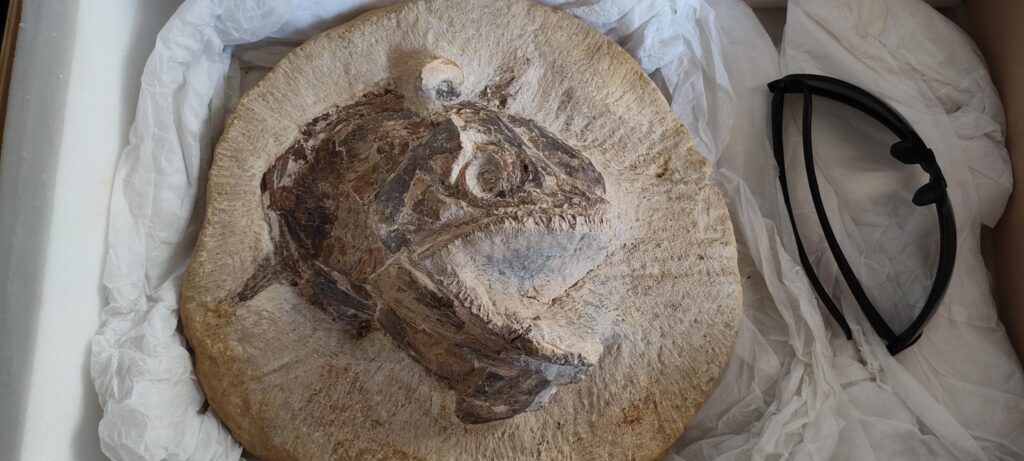
Some of you may already have heard about the remarkable geological site at Court Farm, Kings Stanley, in Gloucestershire. In 2022, an excavation at the site uncovered an extraordinary collection of fossil fish preserved within a layer of limestone nodules in Lower Jurassic rocks. The fossils were exceptionally well preserved and included several rare specimens, attracting widespread media attention.
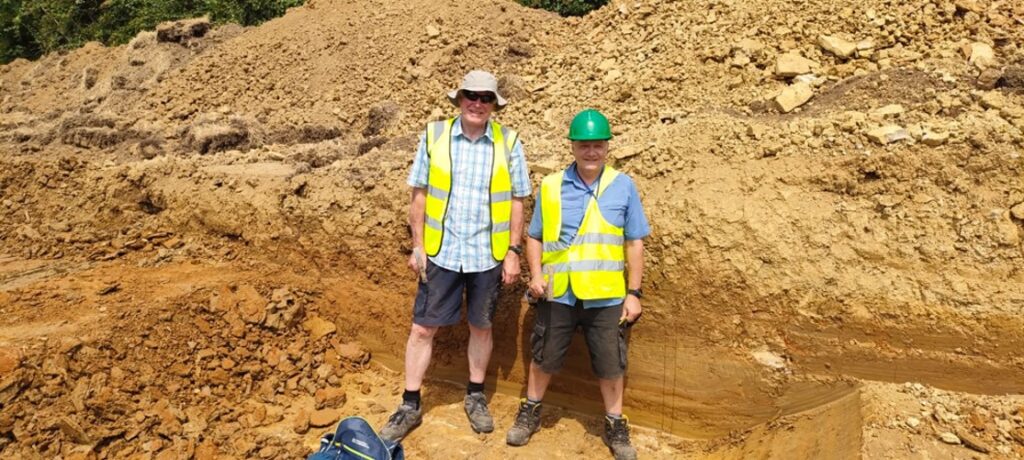
This year, a second excavation returned to the same location and uncovered even more significant fossils from the same fossil-rich layer. A wide range of geologists and palaeontologists have been involved in assessing the material recovered at the site, all helping to piece together the story of this ancient Jurassic environment. Among those involved is Dr Philip Copestake of Merlin Energy Resources Ltd., a specialist in Lower Jurassic stratigraphy. Phil, along with Dr Ian Boomer of the University of Birmingham, was invited to sample the fossil-bearing rocks for microfossils to help determine exactly where this important layer sits in the geological record, both locally and across the wider region.
Although ammonites, which are very useful for dating the age of the rocks, have been found alongside the fossil nodules, some of the surrounding clay-rich rocks contain very few of these fossils. Therefore microfossils, including foraminifera, ostracods, dinoflagellate cysts and algae, are being used to help gain a clearer picture of the stratigraphic position, chronostratigraphic age and environment of deposition. During a site visit, Phil and Ian collected around 40 samples from the full sequence of rocks exposed in several trenches and test pits. These included the Marlstone Rock Formation (uppermost Pliensbachian to possibly lowermost Toarcian), the overlying Whitby Mudstone which contains the fossil-bearing nodule layer, and younger rocks above that date from the Early Toarcian period. Altogether, the sequence records a fascinating chapter of Earth history from around 180 million years ago.
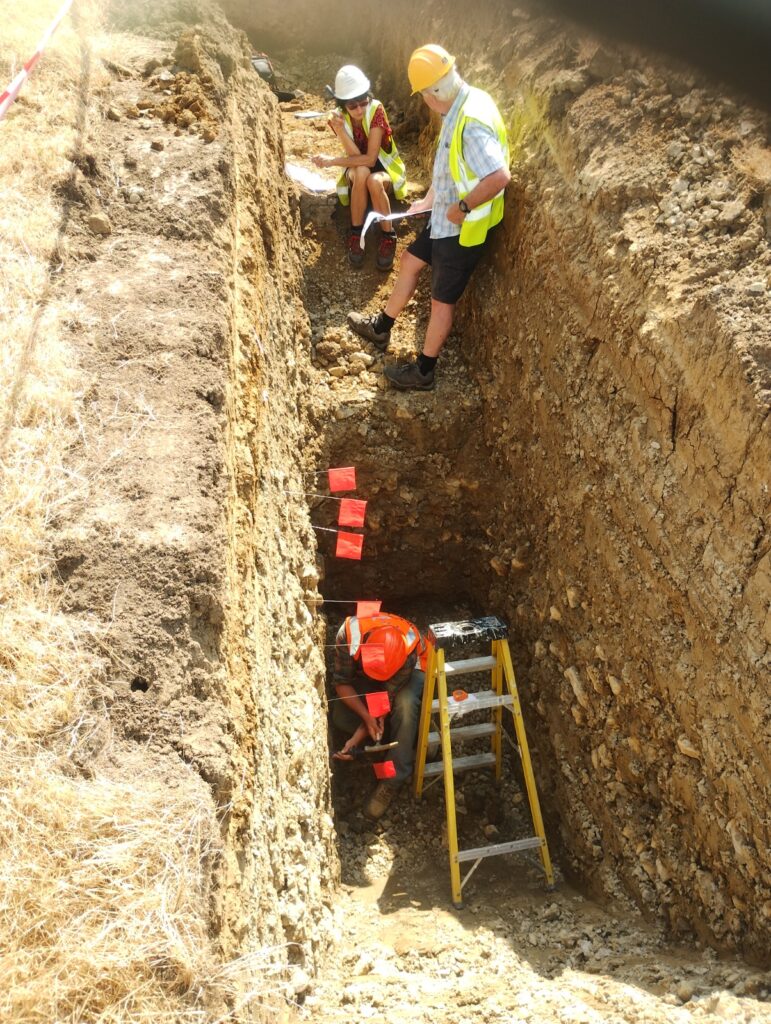
The fossiliferous nodules occur within a distinctive shale layer thought to represent the Toarcian Oceanic Anoxic Event (T-OAE), a major global environmental episode recognised in rocks around the world. During this time, widespread volcanic activity is believed to have triggered climate warming and caused oxygen levels in the oceans to fall dramatically. These anoxic (lacking in oxygen) conditions had an important side effect: animals and plants that died and settled on the seabed were less likely to decay or be scavenged. As a result, many fossils, including those found at Court Farm, have been preserved in exceptional detail, with sites like this often termed “lagerstatte”.
The samples taken by Phil and Ian will be analysed, with the palynological analysis being conducted by Dr Jim Fenton of PetroStrat Ltd. in North Wales. They will also undergo carbon isotope analysis, with the aim of identifying the characteristic carbon isotope curve associated with the Toarcian Oceanic Anoxic Event. Together, these studies will help place the remarkable Court Farm fossils into their wider global geological context.
If you want to read more about the dig, and see some of the exciting finds from this year’s excavation, you can read the daily blog on the Stroud Museum in the Park website.
To learn more about the significance of the Court Farm site, you can watch Dr Philip Copestake speaking with Sally Ann Spence, presenter of the We Dig Fossils YouTube channel. In the interview, Philip discusses the site’s geological importance and explains what the study of the microfossils aims to achieve.