
A Geological Overview of the UK’s Second Carbon Storage Licensing Round
In December 2025 the NSTA announced the UK’s second carbon storage licensing round. Merlin round up the geological highlights.

In December 2025 the NSTA announced the UK’s second carbon storage licensing round. Merlin round up the geological highlights.

The Bujak Database is an essential resource for all companies evaluating Paleogene reservoirs in the North Sea/West of Shetland areas. It provides improved stratigraphic calibration for both hydrocarbon and energy transition projects. Continue reading to find out more about this product that is available for purchase from our website.

Our Principal Stratigrapher Phil Copestake will be giving the next GESGB evening lecture online on 30th April. Continue reading to find out more about his talk and how to register.

In January 2021, an almost complete ichthyosaur skeleton was discovered at the Rutland Water Nature Reserve in Leicestershire. A paper describing the full excavation process and preliminary research findings was published in October last year. Continue reading to learn more about this interesting find, and what connection Merlin has to it.
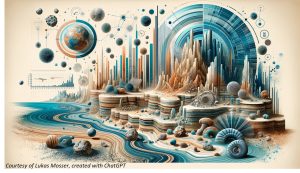
On 6-7th March 2024, the FORCE biostratigraphy group are holding a conference at the Norwegian Offshore Directorate in Stavanger, with talks focusing on both the conventional and ‘less conventional’ applications of biostratigraphy. Our Principal Stratigrapher, Phil Copestake, will be attending and giving two talks. Continue reading for more information.
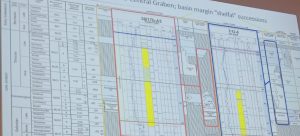
Phil Copestake's presentation at the FORCE Cross Border Seminar was well received. He and Bill Wilks have enjoyed taking the opportunity to meet with colleagues from Norway at the conference…
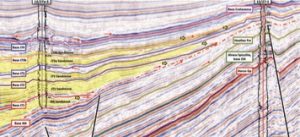
MERL staff would like to congratulate Philip Copestake on the completion of Geological Society of London Memoir 59, Sequence Stratigraphy of the Jurassic–Lowermost Cretaceous (Hettangian–Berriasian) of the North Sea Region.
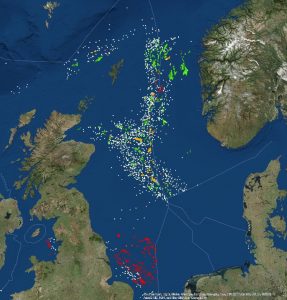
However you say it, the world’s geology does not see political borders the same way us humans do. Rocks are inherently less territorial! At Merlin, we have increasingly recognised the value in transferring knowledge across political boundaries.