
If you visited the Merlin booth at the EAGE Annual 2026 conference in Aberdeen last week, you hopefully took part in our fun competition: DHI Hit or Miss? For those losing sleep wondering whether you got the correct answers, worry no longer, this article will fill you in.
The competition was quite tricky: Even the failures had pretty convincing DHIs, at least from the images we were able to show you. As the commentary below will show, context is everything when it comes to risking with DHIs. If you’d like to brush up on your de-risking DHI skills then you should definitely consider the Essentials of Rock Physics training course.
DHI 1
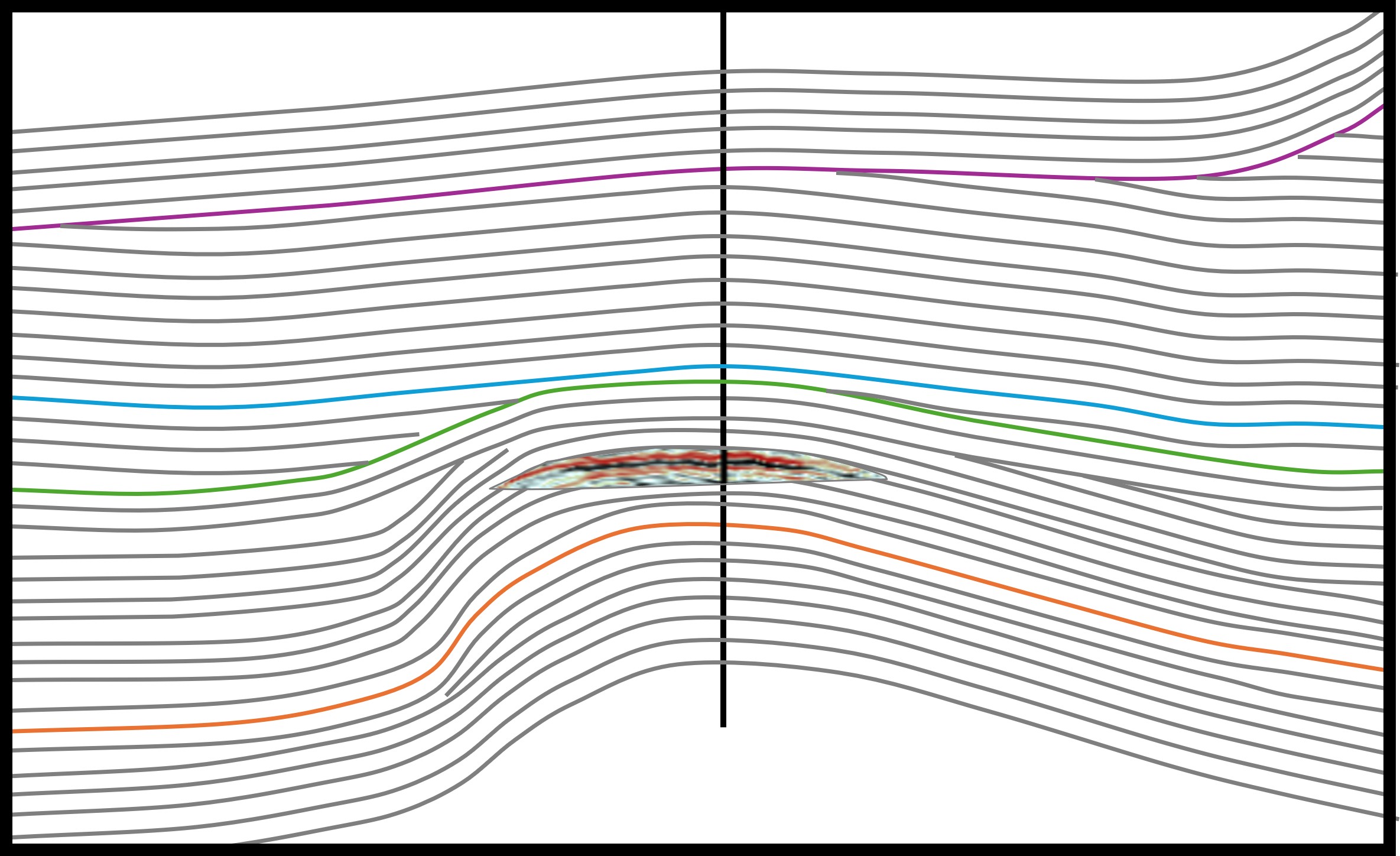
Unfortunately we can’t publish the image of DHI 1 here, but it was a large, folded structure in SE Asia with a bright amplitude anomaly at the crest. The seismic looked convincing: The brightening was constrained by the structural high and was of the correct polarity for hydrocarbons. However, DHI 1 was a dry hole. The exploration well failed to encounter reservoir rock at the apex of the fold. The bright amplitudes were generated by residual gas trapped in silty layers. This is a particularly difficult scenario to de-risk ahead of drilling but highlights that just because there’s a DHI doesn’t guarantee that all elements of the petroleum system will be working.
DHI 2 and DHI 3
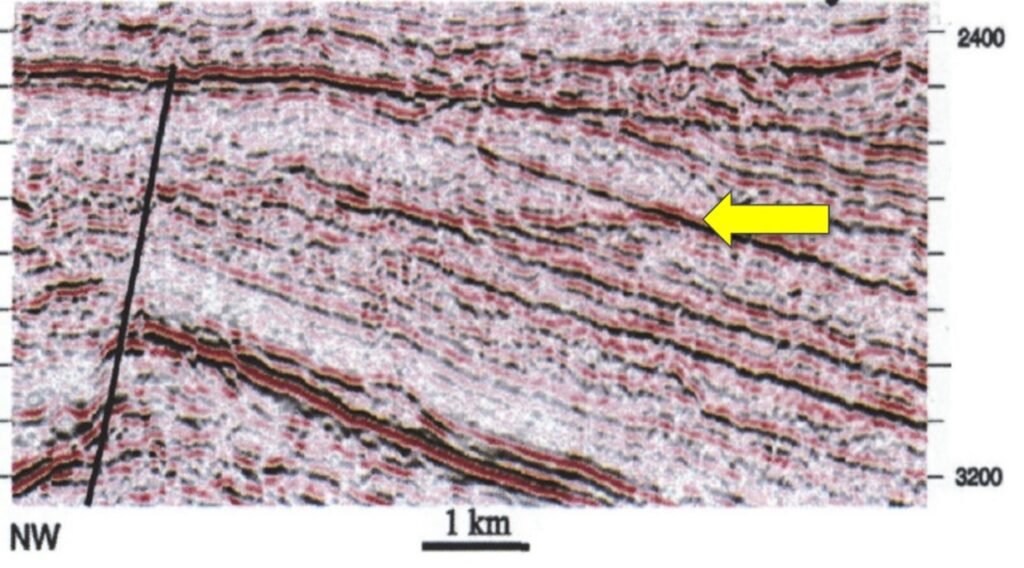
Unfortunately we also can’t republish the image from DHI 2, but it looked remarkably similar to DHI 3 which is shown above. DHI 2 was a genuine hydrocarbon-water contact from SE Asia, however, DHI 3 was a dry hole. Although DHI 3 looks reasonably convincing on this image, detailed analysis of the rock physics was equivocal – it was by no means a slam dunk prospect. It turned out that the flat lying reflector in DHI 3 was generated by an Opel CT – quartz transition. This is a temperature controlled geological phenomena which is why the boundary appears to be flat and discordant to the dip of the other reflectors.
DHI 4
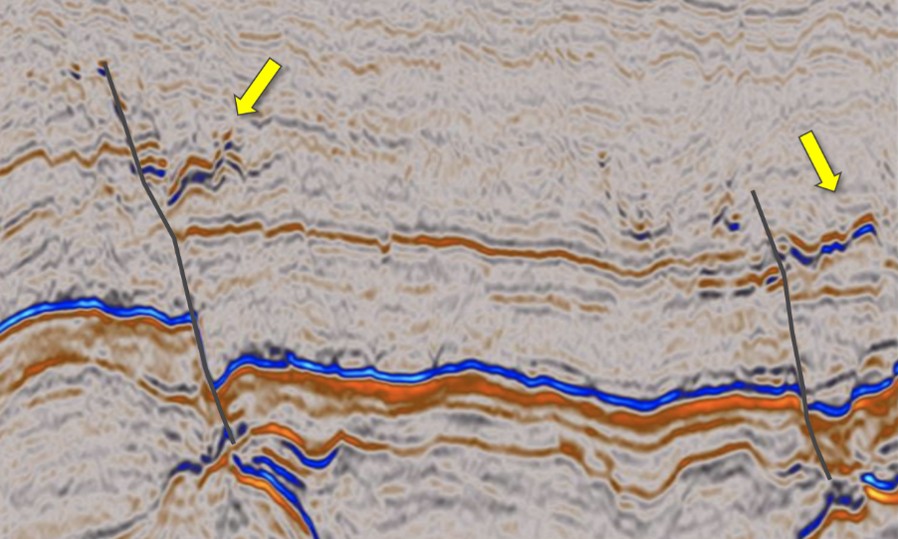
The amplitude anomalies of DHI 4 were a success. These wing and saucer shaped amplitude anomalies are generated by hydrocarbon bearing injectite complexes. Merlin was lucky enough to work on these fields when the first exploration wells were being drilled. It was an exciting time because prior to well calibration we couldn’t be sure the amplitudes weren’t generated by high porosity wet sands. First oil was achieved from the Catcher fields in 2017.
DHI 5
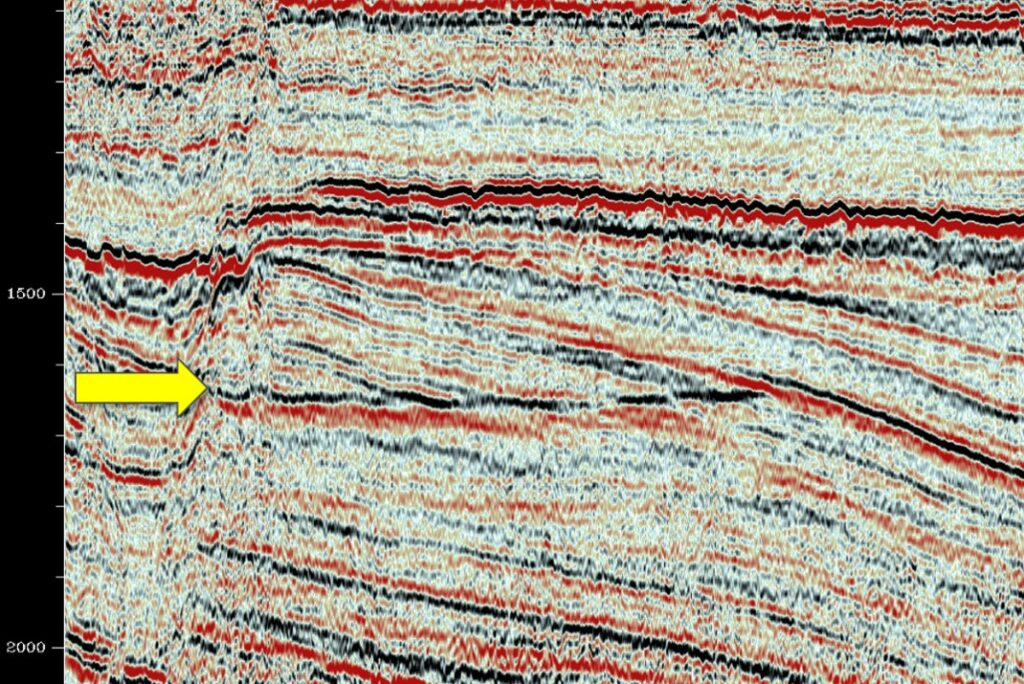
Finally, the flat-spot of DHI 5 was a success. This is the famous Troll flat-spot in the Norwegian North Sea. At first it was considered too good to be true, but nowadays we hold it up as the poster child of everything a hydrocarbon related flat-spot should have:
- It’s (approximately) flat and follows a structural contour.
- It’s a hard event and it appears brighter on the far angle stack than the nears.
- It’s discordant to reflectors coming from the internal reservoir bedding. The “wobbles” along the contact are related to interference (tuning) between the gas-water contact and internal reservoir bedding.
- The top reservoir reflector changes character as it traverses the flat-spot. Examining the AVA response, the up-dip vs down-dip reflectivity is consistent with gas above the contact and brine below.
Results
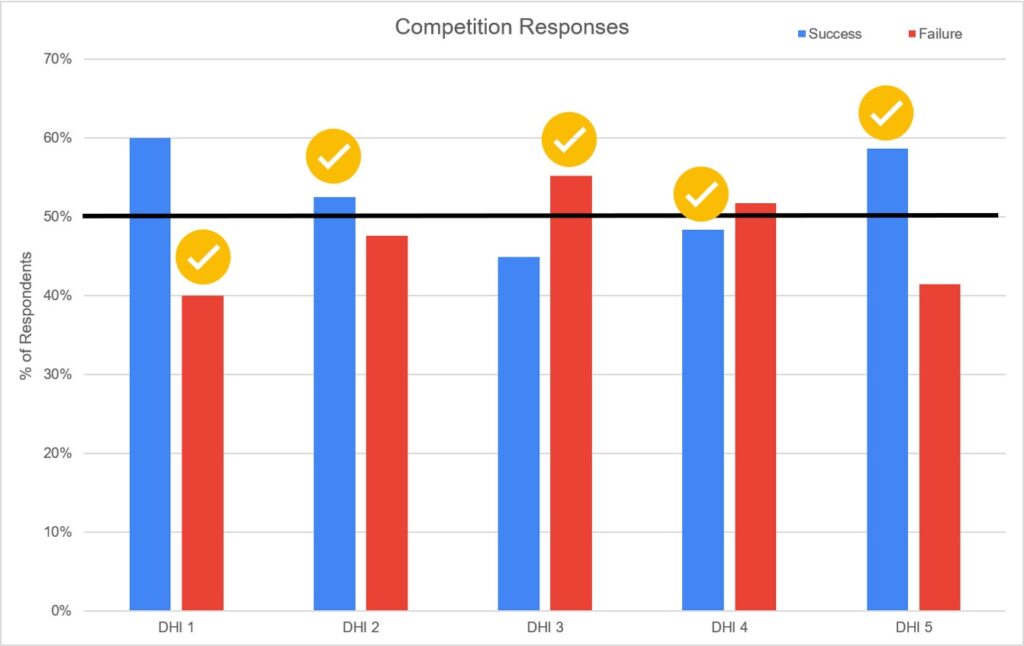
As you can see from the graph, the results hover around the 50% mark indicating that as a collective we really weren’t sure how to classify each of the DHIs. This is completely reasonable given the minimal context we provided everyone with and the fact that many respondents weren’t even geoscientists! DHI 5 (Troll) produced a slightly more polarized (and accurate) hit or miss prediction, probably because this was the most “famous” of the DHIs shown. However, the answers for DHI 1 were also less equivocal, but this time more people predicted a hit when in fact it was a miss.
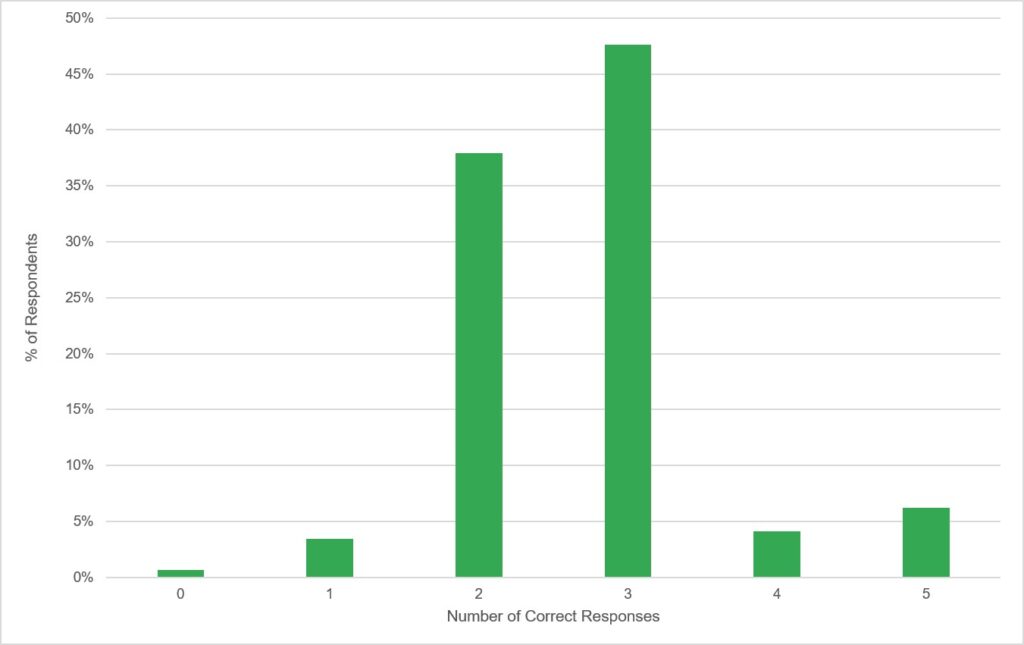
The distribution above is approximately bell shaped, with most people getting either 2 or 3 correct answers out of 5. One unlucky person incorrectly classified all of our DHIs.. they shall remain anonymous but funnily enough they’re a geophysicist! Nine people correctly classified all 5 DHIs: Congratulations Kata Papp, Emily Kay, Nick Cottage, David Vlok, Rene van Oorschot, Dias Urozayev, Geoff Freer and Rosa Scott, and of course to Kamshat Ussenova who won the trilobite.
References:
- Aram, R. B. 1999. West Greenland versus Voring Basin: A comparison of two deepwater frontier exploration plays. In: FLEET, A. J. & BOLDY, S. A. R. (eds) Petroleum Geology of Northwest Europe: Proceedings of the 5th Conference, 1289-1298. © Petroleum Geology ’86 Ltd. Published by the Geological Society, London.
- Williams, R., and Marsden, G. 2024. AI Seismic Interpretation to delineate, extract and investigate the Injectites of the Catcher area (CNS UK). EAGE Annual 2024, 85th Conference & Exhibition, Oslo, Norway.
- Simm, R., Bacon, M., & Bacon, M. (2014). Seismic Amplitude: An interpreter’s handbook. Cambridge University Press.